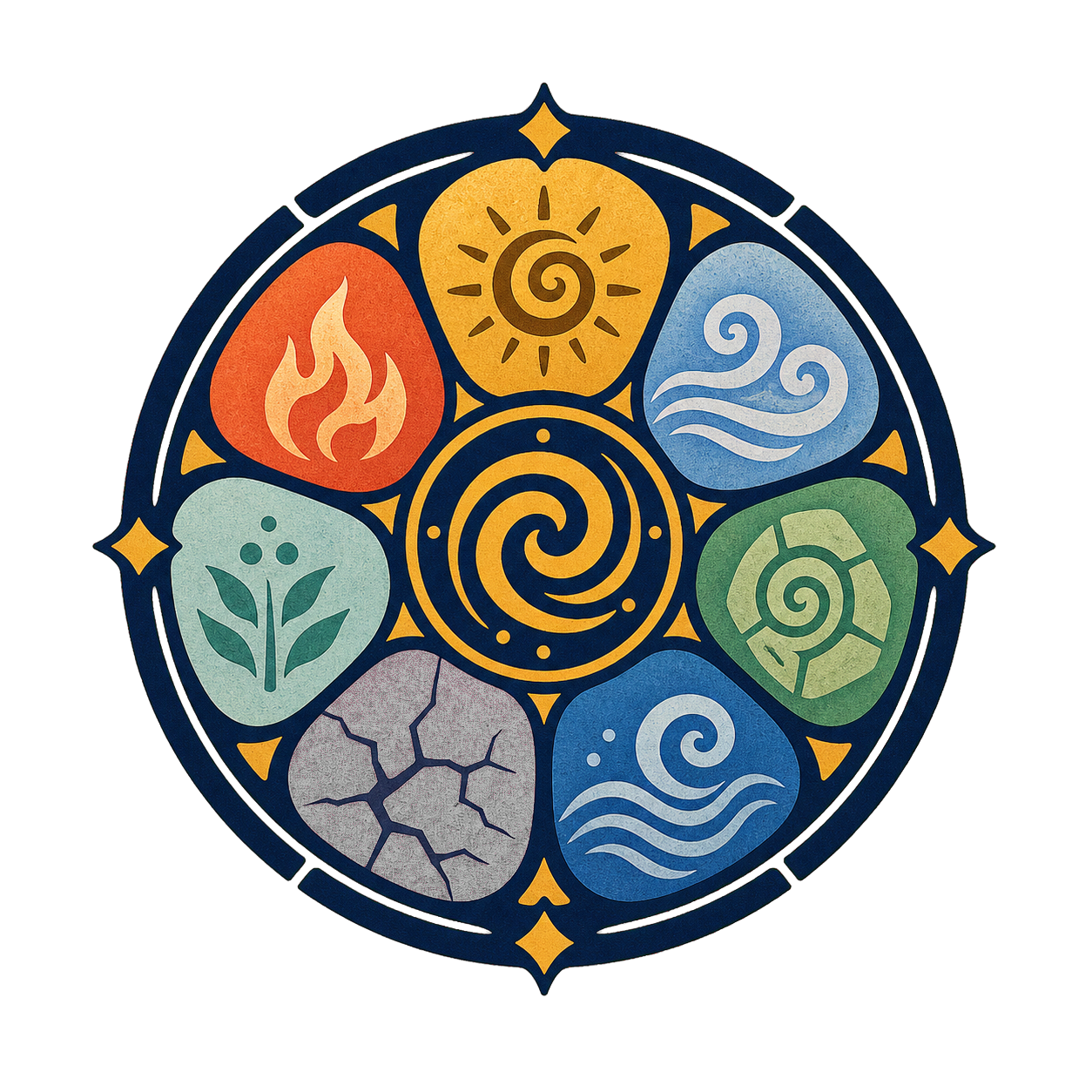
Avatar Seven Havens Art Style: Why It Looks Different and What Inspired It
Explore the Avatar Seven Havens art style, its Mœbius and ’90s anime influences, animation studios, and fan reactions.
Why the New Look Has Become Such a Big Conversation
The Avatar Seven Havens art style is one of the first things longtime fans noticed from the early promotional material—and it has already sparked strong reactions. The Avatar Seven Havens art style matters because visual storytelling has always been central to the franchise’s identity, from the painterly skies of Avatar: The Last Airbender to the industrial cityscapes of The Legend of Korra.
Avatar: Seven Havens is positioned as the next major animated chapter following Korra, with earthbender Pavi taking on the Avatar role in a world devastated by a catastrophic event. That setting calls for a visual language that feels unstable, strange, and more fantastical than the eras that came before it.
Rather than simply recreating the familiar Avatar look, the production appears to be expanding it. That choice may feel jarring at first, especially for viewers attached to the original series’ clean character designs and traditional East Asian art influences. But the reported creative influences help explain why the new series looks more surreal, colorful, and alien.
| Visual question | Short answer |
|---|---|
| Is Seven Havens still 2D animated? | Yes. Available production information identifies it as a 2D animated series. |
| Is the show meant to look like the prior Avatar series? | It appears designed to remain connected to the franchise while using a more otherworldly visual direction. |
| What are the reported influences? | French cartoonist Mœbius and 1990s anime are the most frequently cited creative references. |
| Why are fans debating it? | The teaser’s simplified shading, distinct linework, and unusual environments differ from expectations built by earlier shows. |
| Does a different art style mean lower quality? | Not necessarily. Style, animation budget, compositing, and motion quality are separate production factors. |
What Defines the Avatar Seven Havens Art Style?
Based on early artwork and teaser discussion, the new visual direction seems to emphasize broad shapes, high-contrast environments, crystalline ruins, and unfamiliar landscapes. The result is less grounded in the architecture and geography viewers associate with the Four Nations.
The reported story premise supports that approach. Humanity is said to be scattered across the Seven Havens after a cataclysm has damaged both the physical world and Spirit World. A post-disaster setting benefits from visual disorientation: landscapes should look broken, magical, and unlike places audiences have already explored.
Key characteristics visible in early material
| Element | Earlier Avatar series tendency | Seven Havens direction appears to emphasize |
|---|---|---|
| Backgrounds | Natural landscapes, historical architecture, urban modernization | Surreal terrain, destruction, strange formations, and dreamlike settings |
| Character silhouettes | Distinct but relatively grounded costumes and proportions | More stylized proportions, bold costume shapes, and pronounced accessories |
| Color use | Earthy palettes with elemental bursts of color | Brighter fantasy color contrasts and more unusual environmental hues |
| Shading | Consistent cel shading with painterly background depth | Flatter areas of color in some shots, with selective atmospheric effects |
| Spirit imagery | Mystical but often rooted in natural forms | A more cosmic, fragmented, and otherworldly atmosphere |
It is important not to confuse a teaser’s editing and compression with final broadcast quality. Promotional footage can use unfinished compositing, shortened shots, temporary color work, or intentionally simplified images to establish a mood. Animation is a process, and the final episode experience depends on movement, timing, sound design, and scene-to-scene consistency—not just paused frames.
That said, the first impression is meaningful. In animation, character appeal and environmental readability are immediate. When a beloved franchise changes its visual grammar, audiences naturally compare every line, shadow, and facial expression to what they already know.
The Mœbius and 1990s Anime Influences Explained
Reports connected to the production indicate that co-creator Bryan Konietzko has described the series as more “fantasy” and “otherworldly” than previous Avatar shows. He has also pointed toward the work of Jean Giraud—better known as Mœbius—and anime from the 1990s as influences.
Mœbius was a hugely influential French artist known for imaginative science-fiction worlds, airy linework, unusual proportions, and vast environments that can feel simultaneously beautiful and unsettling. His influence can be seen across animation, comics, films, and video games.
The Avatar Seven Havens art style does not need to copy Mœbius directly to reflect that influence. It can borrow a design philosophy: make the world feel expansive, uncanny, and visually unpredictable.
| Influence | Hallmark qualities | How it could inform Seven Havens |
|---|---|---|
| Mœbius | Open compositions, surreal worlds, elegant linework, strange technology | More unusual landscapes, dreamlike ruins, and bold visual silhouettes |
| 1990s anime | Expressive posing, dramatic lighting, detailed effects, kinetic action | More heightened action staging and emotional character acting |
| Classic Avatar design | Martial-arts-based movement, culturally specific architecture, readable elemental effects | A continuing foundation for bending, costumes, and character staging |
| Spirit World imagery | Symbolic color, fluid environments, spiritual distortion | A setting where physical and spiritual damage can change the look of entire locations |
For fans, the useful comparison is not “old versus new” but “purpose versus execution.” The original shows changed their own visual priorities depending on the story. The Last Airbender often balanced warmth and travel-adventure energy. Korra embraced modernity, machinery, and political tension. Seven Havens is reportedly about collapse, survival, and a world that fears its new Avatar. A more fractured art direction is thematically logical.
Who Is Animating the Series and Why That Matters
The reported animation partners for the new series are Chouette Compagnie, a French studio, and Armada TMT Studio in Vietnam. International animation pipelines are common in television production, including within major Western animated franchises.
A studio’s involvement does not tell viewers everything about the final product. Creative direction, storyboards, animation supervision, production timelines, episode complexity, and post-production all shape what appears on-screen. Still, the combination of a French animation partner and publicly cited French-art influences makes the project’s visual experimentation easier to understand.
| Production factor | Why it affects the finished image |
|---|---|
| Character design | Determines facial expressions, costume readability, silhouettes, and overall franchise continuity |
| Storyboarding | Controls action clarity, shot composition, pacing, and emotional impact |
| Layout and background art | Defines the scale and believability of Ellora, the Seven Havens, and the damaged Spirit World |
| Animation | Creates weight, martial-arts flow, bending effects, and personality through motion |
| Compositing | Adds lighting, atmosphere, shadows, particles, and depth to individual scenes |
| Music and sound | Changes how viewers perceive a visual moment, especially dramatic reveals and action scenes |
Music will matter especially here. Jeremy Zuckerman’s work has been closely associated with the emotional identity of earlier Avatar projects. Production reports suggest Seven Havens will use a notably different, more synthesis-oriented instrumental palette. That could reinforce the series’ unfamiliar visual world rather than simply repeating the sounds of Aang or Korra’s eras.
For official franchise announcements and future release updates, fans should follow Paramount+’s official Avatar collection, rather than treating social-media rumors or edited teaser clips as confirmed production information.
Why Some Fans Love the Change—and Others Don’t
Early community reports show a split reaction. Some viewers are excited by the possibility of a visually riskier Avatar world, while others feel the teaser’s character rendering looks flatter or more youthful than they expected.
This is a community reports issue, not an objective verdict on the completed series. A new style can create a strong emotional response because audiences use familiar aesthetics as a signal of tone, quality, and continuity.
| Common fan response | What may be behind it | A fair way to assess it |
|---|---|---|
| “It looks too different.” | Attachment to the visual identity of Aang and Korra’s series | Compare completed scenes, not only promotional stills |
| “The shading looks flat.” | Teaser lighting, compression, or a deliberately graphic visual approach | Watch for consistency and depth across full episodes |
| “It feels younger.” | Brighter colors, rounded designs, or logo presentation | Judge the story’s themes, dialogue, and stakes separately from the designs |
| “The world looks amazing.” | Interest in the crystal-like landscapes and post-cataclysm setting | Consider whether the environments support the narrative |
| “The animation seems rushed.” | Limited footage makes motion quality difficult to judge | Evaluate fight choreography, acting, and effects after release |
The strongest early criticism tends to focus on shading and finish. In traditional 2D animation, less shading is not automatically a shortcut. Flat color can be a deliberate choice that improves clarity and makes motion easier to read. However, viewers may reasonably prefer richer shadow work if they associate Avatar with cinematic lighting and textured backgrounds.
The most constructive response is to identify what specifically does or does not work. “I dislike it” is valid, but “the character faces feel less expressive in close-ups” or “the environmental colors overpower the action” gives the production choice a clearer critique.
How to Evaluate the Art Style Fairly When the Series Arrives
If you are unsure about the Avatar Seven Havens art style, approach the first episodes with a production-minded checklist. This helps separate personal preference from concerns about craftsmanship.
| What to watch for | Questions to ask | Why it matters |
|---|---|---|
| Action readability | Can you clearly follow bending moves and character positions? | Avatar action depends on martial-arts-inspired motion and geography |
| Character acting | Do faces, poses, and timing convey emotion? | Strong animation is more than detailed linework |
| Worldbuilding | Does Ellora and each Haven feel visually distinct? | The setting should help tell the story of a fragmented world |
| Visual continuity | Do designs remain consistent between scenes and episodes? | Consistency makes a new style feel intentional |
| Tone | Do colors and effects support danger, hope, humor, and mystery? | Art direction should enhance the story rather than distract from it |
| Spirit-world design | Does the surreal imagery feel meaningful rather than random? | The central conflict reportedly involves both human and spirit forces |
A few practical tips can make the viewing experience better:
- Watch a full episode before judging animation from screenshots.
- Avoid judging visual detail through heavily compressed social clips.
- Compare the series to its own storytelling goals, not only to nostalgia for the prior shows.
- Pay attention to movement in earthbending scenes, because Pavi’s fighting style should reveal how the production interprets the new Earth Avatar.
- Revisit early impressions after three episodes. Many animated series establish visual rules gradually.
The Avatar Seven Havens art style is taking a real creative risk, and that risk is exactly why it has attracted attention. Whether every viewer embraces it or not, the series seems positioned to present a damaged Avatar world that should not look comfortable, familiar, or untouched.
FAQ
Is the Avatar Seven Havens art style still traditional 2D animation?
Yes. Available production information identifies Avatar: Seven Havens as a 2D animated series. Its distinct appearance comes from art direction, character design, backgrounds, color decisions, and compositing rather than a switch to full 3D animation.
What inspired the Avatar Seven Havens art style?
Reported influences include the surreal science-fiction art of French cartoonist Mœbius and anime from the 1990s. These references align with the show’s reportedly more fantastical, post-cataclysm world.
Why does the new Avatar series look different from The Last Airbender?
Each Avatar era has used visuals that fit its world. Aang’s story centered on a war-torn but recognizable world, while Korra’s era introduced modernization. Seven Havens reportedly takes place after a catastrophe that has affected both the physical and Spirit Worlds, encouraging a stranger and more fragmented design approach.
When is Avatar: Seven Havens expected to premiere?
Available reference material lists an October 9, 2026 Paramount+ premiere date. Release schedules can change, so check official Paramount and Avatar Studios channels for the latest confirmation.
Related Guides
Avatar Seven Havens Animation Studio: Who Is Making the New Series?
Learn which studios are animating Avatar: Seven Havens, its reported visual influences, production team, and what fans can expect.
Avatar Seven Havens Announcement: Release Date, Cast, Story, and Trailer Details
Break down the Avatar Seven Havens announcement, including its 2026 release date, Pavi’s story, cast details, and production team.
Avatar Seven Havens Cast: Confirmed Voice Actors, Characters, and Series Details
See the confirmed Avatar Seven Havens cast, credited character roles, production details, release date, and what remains unannounced.
Avatar Seven Havens Creators: Who Is Making the New Avatar Series?
Meet the Avatar Seven Havens creators, returning production talent, animation partners, music team, and what their involvement means.